Controlled Recovery Time
Recovery should be slow enough to create the memory effect, but consistent enough that the customer does not feel a different product from one batch to the next.
Memory foam system selection must cover controlled recovery, durability, density and batch stability together; not only initial softness or price per kilogram.
This page is for manufacturers facing raw material price increases, quality fluctuations, poor recovery, product sagging, cutting waste or consumer complaints. The message moves from material purchasing to quality and total-cost control.
At this stage, Sepehr Donya acts as a technical supplier, selecting and supplying polyurethane raw materials for memory foam mattresses, pillows, toppers and comfort parts with focus on production stability, risk reduction and professional purchasing decisions. For basic chemistry background, review what polyurethane can and cannot solve before selecting a system.
If memory foam only feels soft in the initial test but does not remain stable after use, cutting, packaging or temperature change, it cannot support industrial production or product branding.
Recovery should be slow enough to create the memory effect, but consistent enough that the customer does not feel a different product from one batch to the next.
A foam can meet target density and still feel wrong. The real issue is the balance between support, softness, indentation force and long-term comfort.
Initial softness is not enough if the layer loses height, sags too early or fails after compression, packaging, transport or repeated use.
A system that produces sticky blocks, torn edges or unstable cell structure increases waste before the product even reaches the customer.
The right formulation is the one that matches comfort targets, machine conditions, block size, curing time, cutting behavior and acceptable waste.
Memory foam used in mattresses, pillows and toppers may look similar, but each application requires a different balance of recovery speed, support, cutting behavior, thickness stability and long-term durability.
For mattress layers, controlled recovery, stable density, low thickness loss and resistance to long-term pressure are critical to maintaining comfort and product performance.
In pillows, consumer experience is judged quickly; airflow, skin feel, recovery behavior and odor control strongly influence perceived quality.
For toppers and comfort layers, the foam must deliver comfort with lower thickness while remaining stable during lamination, roll packing and repeated use.
For mattress and pillow manufacturers, the expensive part is often not the raw material itself; it is unstable batches, cutting loss, rejected blocks and claims after delivery.
| Decision Criterion | Impact on Production | Risk Indicator | Sepehr Donya Recommended Path |
|---|---|---|---|
| Density | Controls material consumption, support level and perceived value of the finished layer. | Density drift between blocks, unexpected weight variation or products that feel lighter than specification. | Define a practical density window and check it against comfort target, block size and cost per finished piece. |
| Recovery Profile | Determines whether the foam feels like real memory foam or only a soft conventional foam. | Recovery is too fast in warm rooms, too slow in cold rooms or inconsistent after storage. | Select a system with a controlled recovery window suitable for your climate, product type and customer expectation. |
| IFD / Support | Affects comfort, pressure distribution and the feeling of premium quality. | Foam feels comfortable in a hand test but bottoms out under body load or becomes too firm after curing. | Balance IFD with density and recovery instead of judging softness only by first touch. |
| Cell Openness and Airflow | Influences odor release, heat feel, curing, roll packing and customer comfort. | Closed cells, poor breathing, trapped odor, shrinkage risk or slow stabilization after cutting. | Match catalyst, surfactant and blowing balance to the required airflow and post-cure behavior. |
| Cutting and Handling Stability | Directly affects waste percentage, production speed and the quality of the finished mattress or pillow. | Sticky surface, torn edges, collapsed corners, delayed demolding or poor slicing quality. | Evaluate the system on real production equipment before committing to full-scale purchasing. |
These are the issues manufacturers recognize quickly because they create waste, delays, returns and pressure on production teams.
The sample feels acceptable, but the production block recovers faster or slower than expected. This makes the product difficult to standardize.
The foam looks good after cutting, but after packaging, transport or repeated use, the layer loses height and the customer notices sagging.
When cells are too closed or curing is incomplete, complaints may come as odor, warm sleep feel or slow stabilization after unpacking.
Sticky blocks, weak corners or uneven cell structure slow down slicing and increase rejected sheets, especially in pillow and topper production.
A memory foam system should be chosen with the manufacturer’s real process in mind: machine type, block size, target product, cutting method, curing time, packaging route and acceptable waste level.
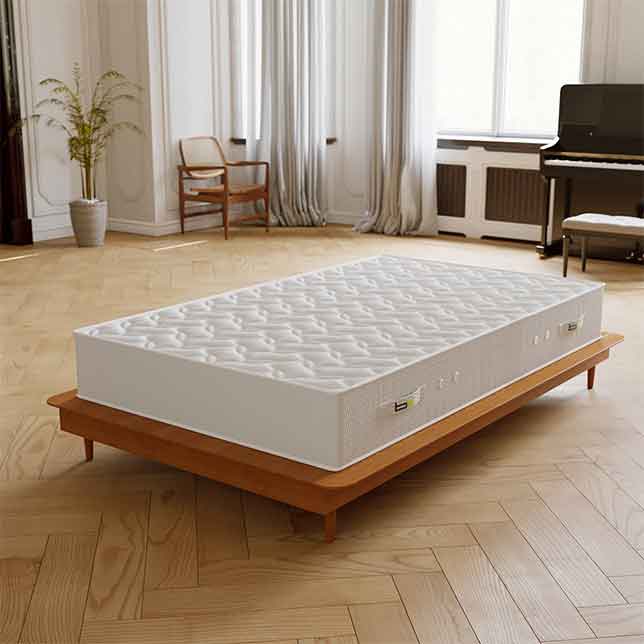
Each product family needs a different balance of touch, support, airflow, recovery and production handling.
Focus on comfort layers that keep thickness, support and recovery behavior stable after compression, lamination and long-term use.
Focus on surface feel, airflow, odor control, shape stability and repeatable recovery in smaller molded or cut pieces.
Focus on thinner comfort layers that can be cut, packed and delivered without losing height or premium feel.
Because small changes in raw material temperature, mixing, catalyst balance, block size, curing time and airflow can change recovery, cell structure and cutting behavior.
No. Density is important, but it must be judged together with IFD, recovery time, airflow, durability and the final cost per accepted product.
Target product, density range, desired recovery, IFD or softness target, machine type, block size, climate, cutting method, packaging route and current production problems.
Share your target density, recovery behavior, application, machine conditions and current production challenge so the technical team can guide the selection more accurately.