What Is PIR Polyisocyanurate Foam?
Polyisocyanurate foam, or PIR, is a thermal insulation material that is increasingly used in construction and industry. Due to its isocyanurate structure and low-conductivity blowing gases, it offers much lower thermal conductivity than many conventional insulation materials. PIR is a thermoset polymer made from the reaction of isocyanates and polyols, and it does not melt when heated.
1. What Is PIR Foam and What Makes It Different?
PIR is a thermoset thermal insulation material that can deliver similar or better thermal resistance than conventional polyurethane foams, while offering improved thermal stability and better fire behavior.
In this structure, isocyanurate bonds make the final material more stable under heat. For this reason, PIR is considered an important insulation option in many industrial and construction applications.
2. History and Structural Logic of PIR Foams
In 1967, urethane-modified polyisocyanurate foams were introduced as PIR. These materials are essentially improved versions of polyurethane insulation that show better thermal stability, flame resistance, chemical resistance, and dimensional stability than PUR.
During PIR production, the reaction between polyol and polyisocyanate is performed at a higher temperature than PUR production. These conditions allow excess isocyanate to react with itself and form strong isocyanurate structures. These crosslinks are stronger than conventional urethane bonds, which improves final foam properties.
3. Trimerization Reaction and Formation of Isocyanurate Structure
The reactions that lead to isocyanurate formation should be clearly visible on the page. This section includes both the reaction image area and a text version of the formula.
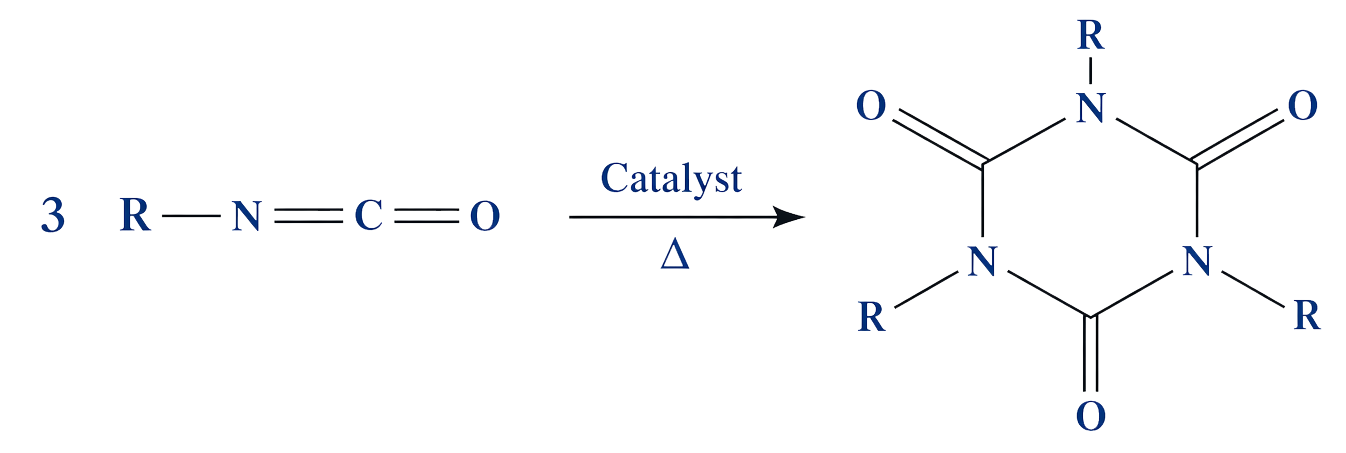
Isocyanate is usually used above stoichiometric levels in the foam formulation to make it easier for one isocyanate group to react with another and form cyclic isocyanurate structures. Catalysts specifically developed to promote isocyanurate formation are also used to increase the speed of ring formation.
The polyisocyanate-to-polyol ratio, or Index, is one of the key parameters that determines final foam properties. At lower indexes, foam behavior is closer to urethane chemistry. As the ratio increases, trimerization becomes more pronounced and PIR-related properties become more visible.
Because too few isocyanurate rings do not create the desired properties, while too many can make the foam brittle, controlling stoichiometric ratio, catalyst type and concentration, and reaction temperature is essential for achieving optimized properties.
4. Benefits of Polyisocyanurate Foam
- Low density
- Good mechanical strength
- Excellent thermal conductivity performance
- High closed-cell content
- Low water absorption
- Low water-vapor permeability
- Better flame and smoke behavior
- Easy installation
5. Comparing PIR Foam with PUR Polyurethane
| Comparison Factor | PUR | PIR |
|---|---|---|
| Flame behavior | Usually B3 grade; can reach B2 with additives | Usually B2 grade; can reach B1 through formulation adjustment |
| Thermal conductivity | About 0.022 to 0.028 W/m.K | Down to about 0.018 W/m.K |
| Bulk density | About 35 to 45 kg/m3 | About 45 to 55 kg/m3 |
| Service temperature range | About -62 to 110 degrees Celsius | About -196 to 205 degrees Celsius |
| Water absorption | About 2.5 to 3 percent | Down to about 0.9 percent |
6. Common PIR Foam Forms and Applications
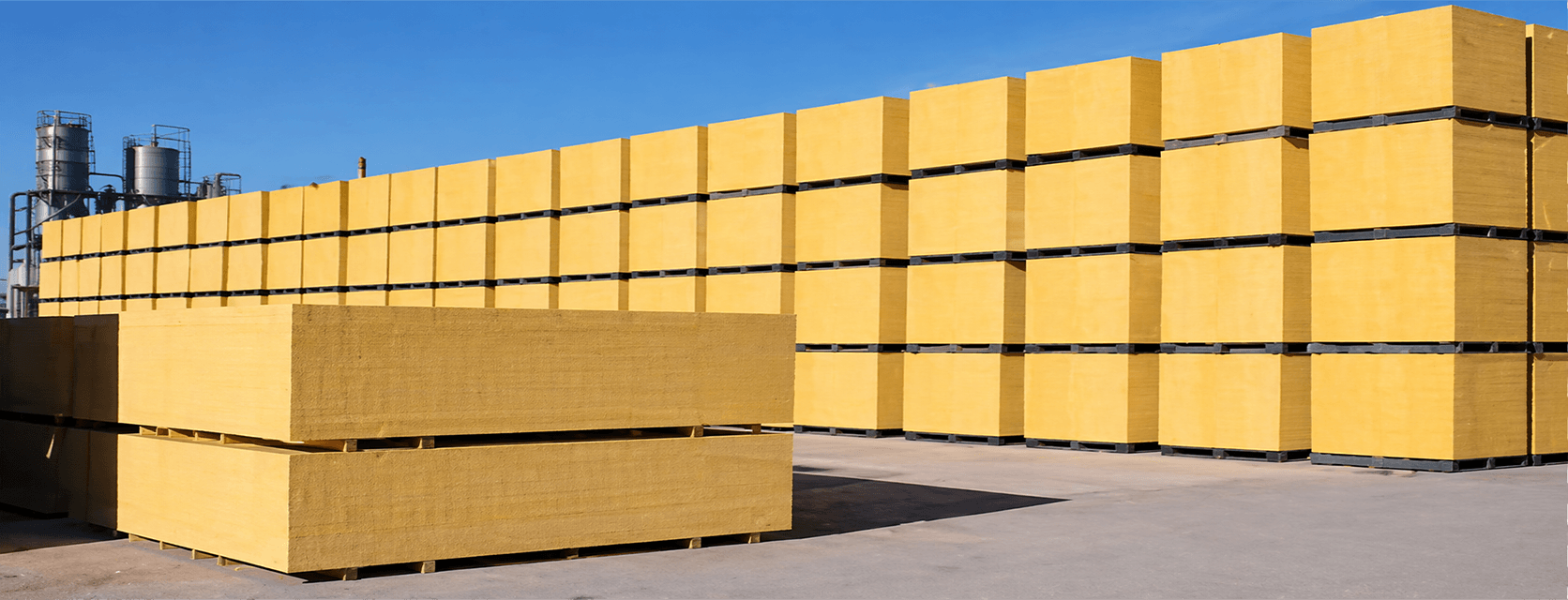
This section has clear image areas so real images can later be placed in the same paths and structure.
6.1 Common Forms of PIR Foam
- Bun-stock blocks produced continuously or individually in a box mold.
- Flat boards
- Pipe shells
- Sandwich panels for walls, roofs, and building envelopes
6.2 Common Applications of PIR Foam
PIR foams are used in a wide range of industrial and commercial applications, including HVAC ducts, food and beverage cold rooms, pharmaceutical facilities, petrochemical projects, and liquefied natural gas applications. This insulation is also used as a core material for sandwich panels in transportation, construction, and temporary shelters.

7. Thermal Characterization of PIR Foams Using the LOI Method
The LOI (Limiting Oxygen Index) test is one of the most widely used methods for determining relative flammability in polymeric materials.
LOI is defined as the minimum oxygen concentration in a nitrogen/oxygen mixture required to sustain combustion of a specimen under test conditions. The higher the LOI value, the better the fire-retardant behavior.
The limiting oxygen index of unmodified PUR foams is generally reported in the range of about 16 to 18 percent, while for PIR foams this value can reach about 35 percent.
Conclusion
PIR foam can be understood as an advanced thermal insulation material with better thermal stability, higher flame resistance, lower water absorption, and broad use in industry and construction. Understanding its differences from PUR is important for more accurate insulation-system selection in industrial and building projects.
Submit a Technical Brief for Initial Review